I hear you asking, “A Jung Platform course on the Tarot? What has that to do with Jungian Psychology?
Jung explored a wide array of psychological concepts, including divination and its companion, synchronicity. Rather than viewing this with surprise, it is helpful to recognize Jung’s vast and diverse interests, which extended to alchemy, flying saucers, and discussions of religion, soul, and spirit.
Central to his vision was the unconscious, a vast reservoir of challenges and solutions to life’s problems.
He identified two layers within the unconscious:
the personal unconscious, containing unprocessed material from an individual’s own life, and
the collective unconscious, a deeper layer holding universal elements shared by all humans simply by virtue of being alive. Jung called these universal contents archetypes—primordial patterns or symbols shaping thought, behavior, and creativity across cultures and time. By integrating the personal and collective dimensions of the unconscious, Jung created a profound and comprehensive framework for understanding human growth and healing.
Self-knowledge can be achieved through a deep exploration of one’s personal history and by reflecting on life using the tools of Jungian psychology.
These tools include dreamwork, recognizing projections, displacements, somatizations, and synchronicities.
Among these, divination practices such as the I Ching and Tarot stand out as unique examples of synchronistic experiences. Jung wrote extensively on the I Ching and mentioned the Tarot as a symbolic system capable of revealing insights about one’s life journey that may not be accessible through other means.
Jung emphasized that every situation, especially those marked by suffering, has both a cause rooted in the past and a purpose guiding the individual toward a future resolution. He referred to this forward pull as the “telos,” derived from the Greek word τέλος, meaning “end, purpose, or goal.” Originally a concept of Aristotelian causality, Jung adapted it to signify the psychological goal of resolving suffering and uncovering its deeper meaning.
The telos of an event suggests that all experiences are moving toward a future goal or purpose.
For Jung, the process of individuation—psychological growth and healing—required not only understanding the historical roots of suffering but also accepting that suffering serves a purpose. It guides the individual toward a future state where the pain can be relieved and integrated into a larger, meaningful whole. Jung believed that any tool aiding this process, including divination, could have profound relevance in fostering self-awareness and growth within Jungian analysis.
Become a Certified Jungian Tarot Reader
Learn to interpret the Tarot for yourself and others through a Jungian lens! This certification program combines theory, practical exercises, guided practice, and reflective learning. Our instructor Ken James has been a Jungian Analyst for over 30 years and worked with the Tarot for 50 years. Sharpen your skills and deepen your understanding of the Tarot’s symbolic language, gaining insights into the unconscious. Perfect for beginners and experienced readers alike. Learn more here!
Jung Platform also offers two other on-demand Tarot programs taught by Ken James: A Jungian Perspective on the Tarot Level 1 and A Jungian Perspective on the Tarot Level 2. These programs provide an in-depth exploration of the Tarot through a Jungian lens, ideal for deepening your understanding of its archetypal wisdom.
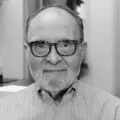
Ken James
Kenneth James, Ph.D. is a Jungian analyst in private practice in Chicago, Illinois. He received a Ph.D. in Communicative Sciences and Disorders from Northwestern University, and a Diploma in Analytical Psychology from the C.G. Jung Institute of Chicago. Along the way, he studied vocal music at the American Conservatory of Music, and learned a modality of music therapy known as The Bonny Method of Guided Imagery and Music at the Institute for Consciousness and Music in Baltimore, Maryland.
In the second module, we will explore the structure and dynamics of the psyche from a Jungian perspective and examine the ways the Tarot reflects these elements.
We will also explore the relationships between synchronicity and the Tarot through readings and discussion. Direct instruction in doing “vertical” and “horizontal” three-card readings, including the Past-Present-Future spread, the Overview-Challenge-Action spread (horizontal) and the Conscious-Issue-Unconscious, and the Issue/Challenge-Internal and External Resources spread (vertical), will be given. A four-card Body-Mind-Spirit-Action reading will also be presented. Opportunities for guided practice in using these spreads will be included, and a “lab” session will be provided for small groups of participants to read for each other with input from the teacher. Assignments for the upcoming month will be given.
In the third module, we will study the Jungian concept of the Transcendent Function. We will look at Jung’s definitions of the transcendent function and explore how the Tarot can be understood as an example of the activity of the transcendent function. We will also examine Jung’s teachings on psychological types, and how typology can be integrated with the Tarot. The relationship between the intuitive function and consulting the Tarot cards will be examined. We will also discuss the role of the “question” in the context of a Tarot reading, as well as explore the difficulties and benefits in formulating meaningful and open questions. The Celtic Cross, a foundational spread in the world of Tarot, will be presented, and opportunities to read the “cross” portion of the Celtic Cross will be provided in the large group and in smaller “breakout” groups, with the teacher’s input. A discussion regarding the ethics involved in Tarot work will be initiated, which will be continued in subsequent sessions. We will also have another lab session. Assignments for the upcoming month will be given.
In the fourth module, we will continue learning how to use the full ten-card Celtic Cross spread in work with clients. There will be opportunities for demonstration and practice. We will also engage in an in-depth exploration of the Major Arcana, including controversies that have been part of the historical analysis of the Major Arcana. The relationship between the Major Arcana and the paths on the Kabbalistic Tree of Life will be covered. Also, guidelines and examples for the upcoming Tarot Salon assignment will be presented, in this fourth module. Continued discussion on ethics and practical aspects of reading Tarot for clients will be held. Assignments for the upcoming month will be given.
In modules 5-7, each participant will present two Tarot readings that they have given to clients/friends outside the program. These presentations will be evaluated by the instructor according to a set of rubrics given in class. Each reading will include a three-card spread and a Celtic Cross spread. These Salon reading presentations will consist of three parts.
Part One: A brief, general, and non-identifying description of the querent, including age level, gender, previous experience of the client with Tarot, either as a reader or a querent, and a description of the question or concern that the querent brought to the reading.
Part Two: A listing of the cards that appeared in each spread. If possible, a photograph of each spread would be helpful.
Part Three: A description of how the reading progressed. This can be an exact transcript of the reading, or a prose description of your interpretations of the cards and the responses from the querent. If you received any feedback from the querent, include that in your presentation.
Following each presentation, the rest of the group will have opportunities to ask questions about the reading, and to offer other reflections about the interaction. This discussion portion of the presentation is not evaluative, but participatory in a helpful and positive way.
In this final module of the certificate program, participants will explore the use of other Tarot decks as a means of amplifying the deck(s) you are most comfortable using. The differences between Tarot decks and other oracle decks will be considered, and the practice of combining Tarot and other oracles will be explored. Participants are encouraged to bring their favorite decks to the live session of this module, and there will be opportunities to show the deck and discuss why it numbers among each participant’s favorite set of decks.
Evaluation of Tarot Reading skills
- Presentation of two clients’ or friends’ readings in a Tarot Salon session will be viewed as a demonstration of each participant’s competency in Tarot reading.
- Get 3 peer reviews of tarot reader competency list and a self-evaluation. The competency list will be shared with you during the course.
A Jungian Exploration of Tarot Imagery: A Course
With Ken James
| 5 Jul 2023 | |
| PAST EVENTS |

In this short course, we will study the Tarot, a seventy-eight-card deck used for divination and as the foundation for an esoteric version of Jung’s active imagination technique. Participants will be instructed on the complex structure of the Tarot and its correlation with Analytical Psychology’s theories regarding the structure and function of the psyche.
We will elaborate on the use of the Tarot for divination, scrutinizing its relationship with the concept of synchronicity. Further, we will delve into the Major and Minor Arcana, evaluating their collective and personal unconscious representation, respectively.
This course will also illuminate the connection between the Transcendent Function and the utilization of Tarot cards to augment intuitive comprehension of internal and external dynamics. Participants will be guided in executing a three-card reading addressing a particular issue, with practical demonstrations provided within the class for better understanding.
It is recommended that each participant come prepared with a Rider-Waite-Smith Tarot deck, as this deck will be the foundation of class discussions and sample readings. The rationale behind this specific deck selection will be elucidated during the course. This endeavor will provide participants with an enriched understanding of the Tarot's role in divination, the study of psyche, and personal introspection.
Kenneth James, Ph.D., is a Jungian analyst in private practice in Chicago. He is the founder and director of The Soulwork Center, dedicated to facilitating the process of individuation according to the teachings of C.G. Jung and other contributors to the field of Analytical Psychology. He received his Ph.D. from Northwestern University and a Diploma in Analytical Psychology from the C.G. Jung Institute of Chicago. Along the way, he studied voice at the American Conservatory of Music and music therapy at the Institute for Consciousness and Music in Baltimore. He also completed four years of post-doctoral study in theology and scripture at the Catholic Theological Union in Chicago. He has taken lay ordination in Zen Buddhism and has studied the Kabbalah with a Lubavitcher rabbi in Chicago.
Ken’s studies of the Tarot began at an early age when he was introduced to the notion of divination by an elderly aunt from Scotland. He has led workshops around the world on the relationship between divination and synchronicity, and on the use of the Tarot to explore the unconscious. The synthesis of Jungian thought, clinical practice, and the numinous has been a strong motif throughout his career.


Няма коментари:
Публикуване на коментар